Last Update
13. May 2026
FAQ: Inside Information
Common questions on identifying and publishing inside information under REMIT.

Common questions on identifying and publishing inside information under REMIT.
The ACER Inside Information Access Portal is a central hub for EU energy market transparency, ensuring all critical events and changes in the wholesale energy market are reported, accessible, and monitored in accordance with REMIT rules. It reduces fragmentation by replacing multiple national publication points with one EU-wide system.
In case of an asset being unavailable (e.g., during an outage), the EIC Code of the affected asset must be identified at the most granular level. For example, if a production unit is made up of multiple sub-units, the EIC of the relevant sub-unit should be reported.
Summary:
See Question § 4.1.18 REMIT Frequently Asked Questions (FAQs): On REMIT fundamental data and inside information collection (V8 – 26 March 2026)
For more information please see:
§3.3.4
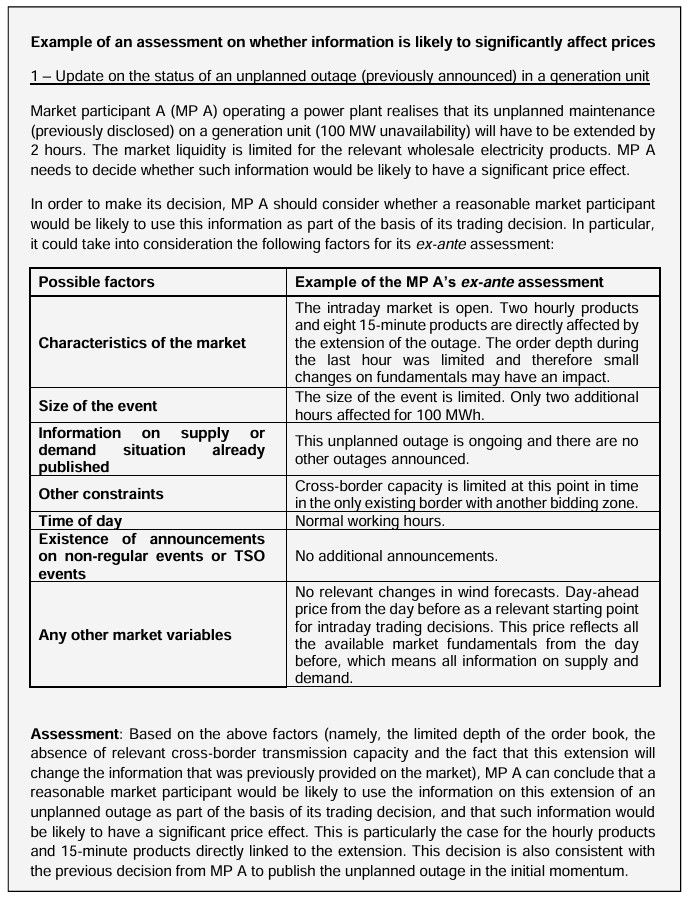
Information is deemed to constitute inside information only if, were it made public, it would be likely to have a significant effect on the prices of related wholesale energy product. Based on the condition of a significant price effect, the Agency narrowed the wide notion of information down to the information that is crucial enough to have the potential to significantly affect the prices of wholesale energy products, and therefore to information that is relevant for trading.
The assessment of the likelihood of price effect has to be performed by a market participant on a case by-case basis.
The market participant should take into consideration the anticipated effect of the information in light of the nature of the information, as well as the specificities of the market and the market situation at the time of the assessment.
A non-exhaustive list of factors that are typically relevant for this assessment are provided below:
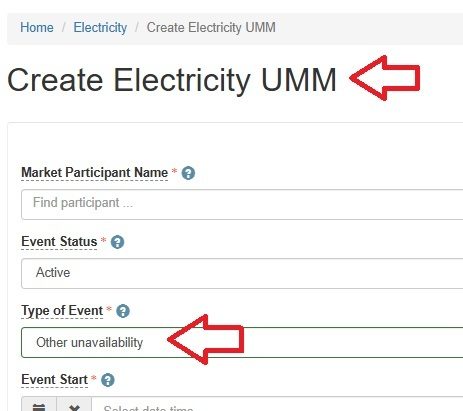
For electricity storage units, the Type of Event “Other unavailability” should be used.
This option applies when the standard values – ‘production’, ‘consumption’, or ‘transmission unavailability’ – do not accurately describe the event.
See FAQs on REMIT fundamental data and inside information V9, Question 5.1.4
Note: This FAQ collection has been compiled from various sources and reflects our understanding. It is provided for informational purposes only and is not legally binding. We do not take any legal responsibility for the accuracy or completeness of the information. For legal or regulatory matters, please consult a professional.